
Choose a quiet hotel room
Choose a quiet hotel room
Assess the neighbourhood, room position and equipment separately. A higher room category or floor does not guarantee silence.
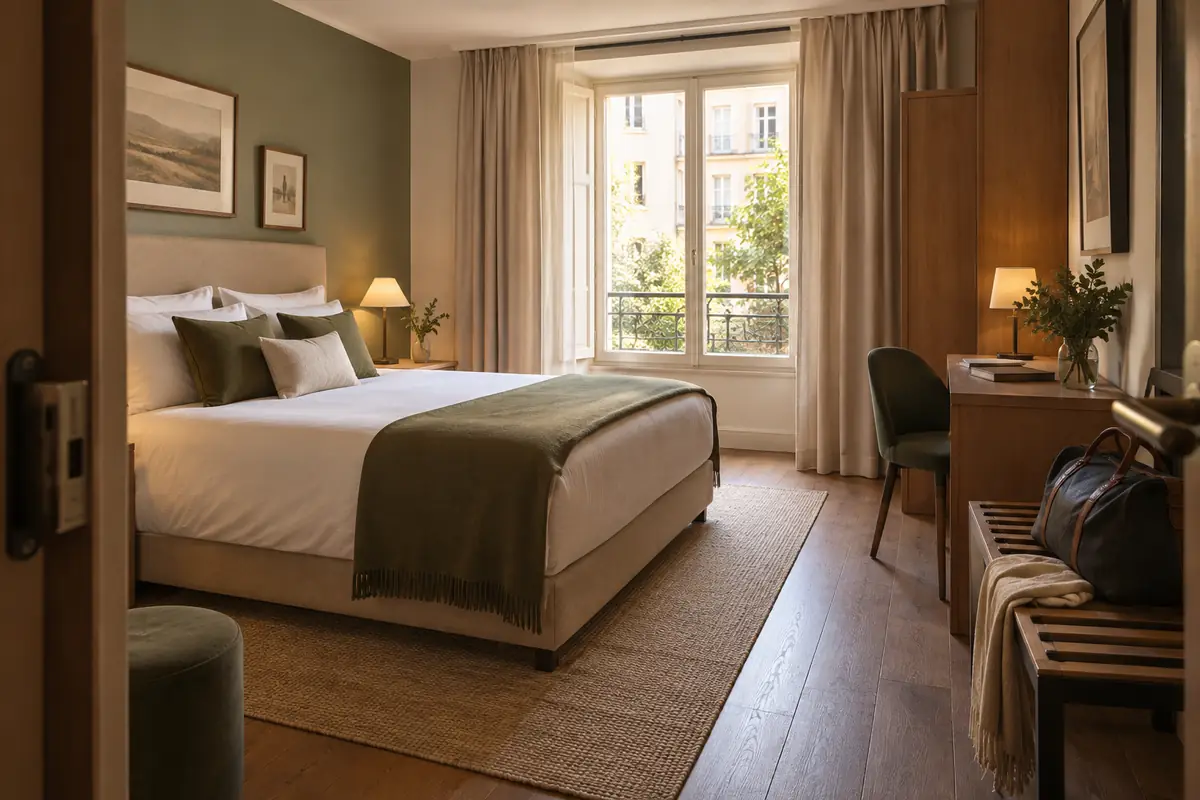
In brief
Choose a quiet hotel room
Assess the neighbourhood, room position and equipment separately. A higher room category or floor does not guarantee silence.
1. Locate noise sources
Identify busy streets, terraces, deliveries and event spaces on a map. Compare your return times with their announced operating hours. A courtyard-facing room may also overlook technical equipment.
2. Ask about the exact room
Ask about orientation and proximity to lifts, service doors, bars and connecting rooms. Explain your hours and what bothers you. Distinguish a request noted on the booking from a guaranteed rate feature.
3. Read relevant reviews
Look for several recent accounts about the same orientation or category. A suite review may not describe a standard room. Identify whether noise concerns the street, neighbours, ventilation or shared areas.
4. Plan an arrival solution
Keep the hotel’s reply and check the room at relevant times. If a problem occurs, explain its source and ask about available alternatives. Do not assume a change or refund will be automatic.
Keep this checklist
Check before booking
- Orientation
- Nearby equipment
- Request or guarantee
- Room-change conditions
Frequently asked questions
Useful answers before booking
Is a high floor always quieter?
No. It may be farther from traffic but closer to a rooftop terrace or technical installation. Ask about the exact position.
How should I make the request?
Specify your hours and noise to avoid, then ask what can be confirmed for the booked category.
Move to comparison
Apply these criteria to your next stay
Choose your destination and dates, then compare only equivalent rooms and terms.