
Practical guide
Book connecting hotel rooms clearly
Neighbouring rooms do not necessarily have an internal door. Confirm layout, occupants and whether the arrangement is guaranteed.
In brief
Book connecting hotel rooms clearly
Neighbouring rooms do not necessarily have an internal door. Confirm layout, occupants and whether the arrangement is guaranteed.
1. Distinguish the layouts
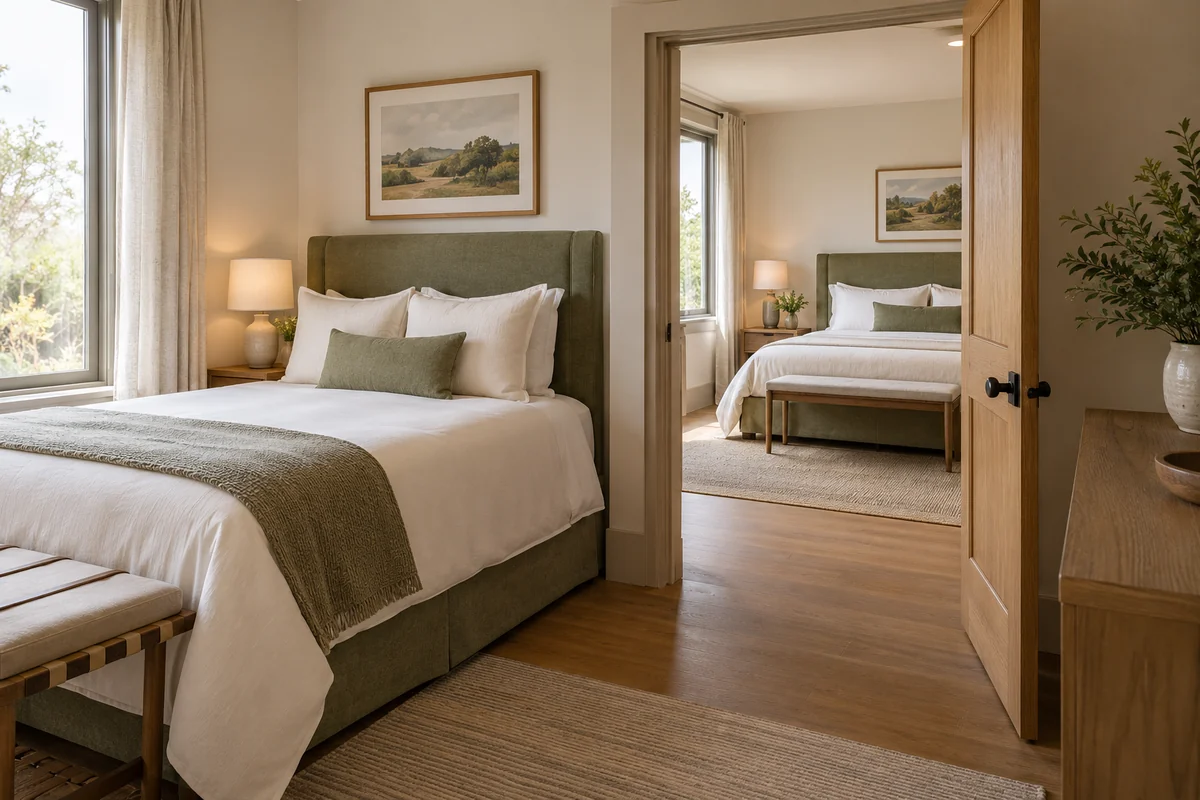
Connecting rooms have an internal passage; adjacent rooms may require the corridor. A family suite may offer one room or separate sleeping areas. An apartment with a kitchen does not automatically have several bedrooms. Ask for a plan showing doors and bathrooms.
2. Declare guests and beds
Specify adults, children’s ages at the stay date and required beds. Ask whether extra beds are permanent, folding or sofas, reduce usable space and cost extra. Check permitted occupancy for each room and the number of bathrooms.
3. Confirm the internal connection
Look for a category sold as a connecting set. With separate reservations, ask whether the internal door is guaranteed or merely requested subject to availability. A booking note is not automatically a guarantee. Keep the arrangement and room count in writing.
4. Compare the entire stay
Compare the pair with a suite or apartment for identical dates and guests, including breakfasts and extra beds. Check conditions for each room and what happens if only one is cancelled. Verify the internal connection on arrival.
Keep this checklist
Before booking
- Internal door or proximity
- All guests and ages
- Beds and bathroom count
- Written arrangement confirmation
Frequently asked questions
Useful answers before booking
Are adjacent rooms connecting?
Not necessarily. Ask specifically about an internal door.
Is a booking request enough?
It may remain subject to availability. Ask for confirmation of the arrangement sold.
Move to comparison
Apply these criteria to your next stay
Choose your destination and dates, then compare only equivalent rooms and terms.